
Tank construction
Why Is the Inner Layer of a Water Tank Important?
The inner layer is the only surface your stored water touches. In a Jumbo Tank it is white, food-grade virgin material, smooth and moulded into the wall. Here is what each of those words is actually doing.
6 min read
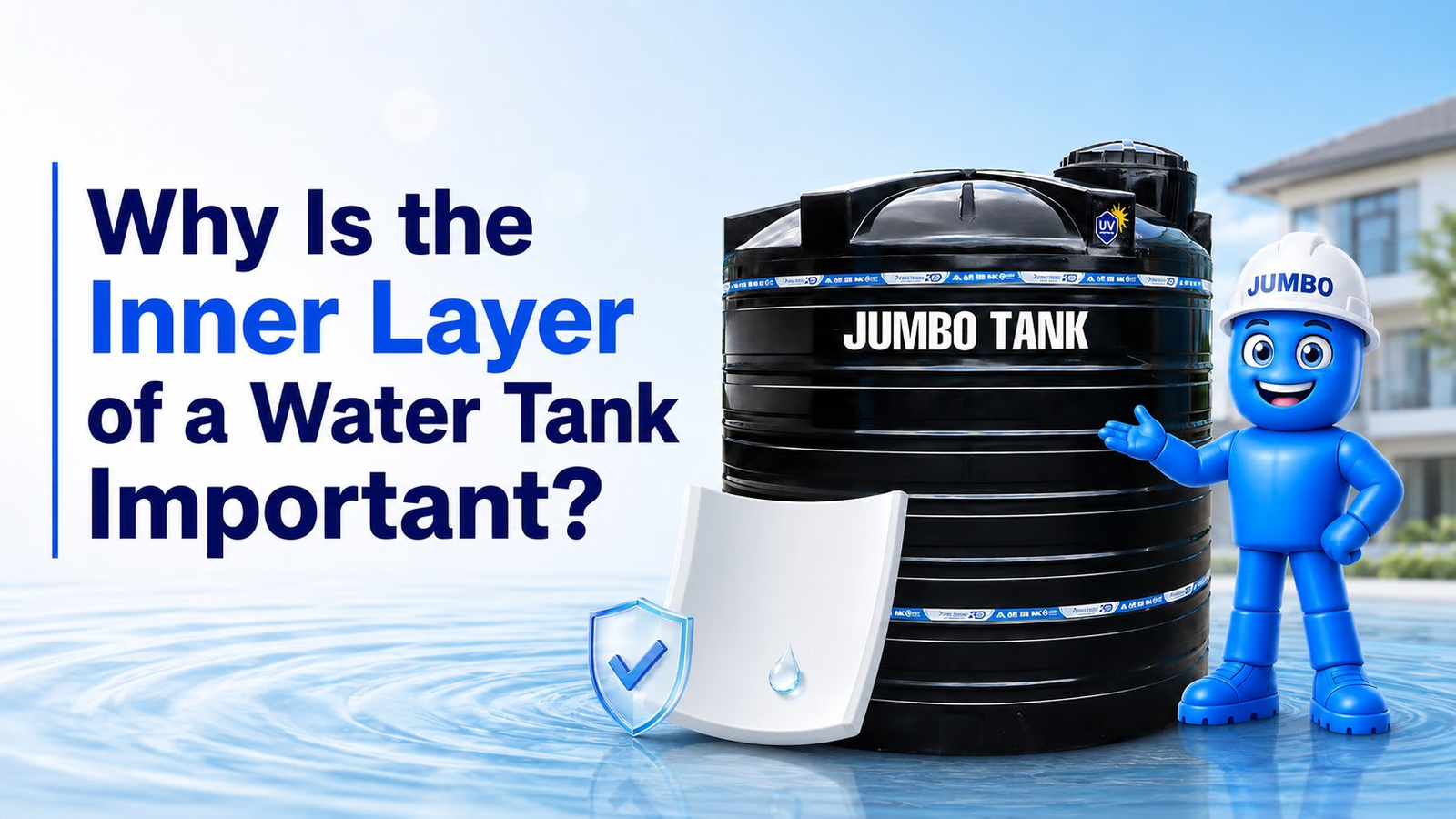
In short: the inner layer is the surface that touches your stored water every day. In a Jumbo Tank it is white, made from food-grade virgin material, smooth, and moulded into the wall rather than added to it. Those qualities support hygienic storage and make the tank easier to inspect and to clean.
Water storage is part of daily life here
A water tank is a basic part of running a home, a farm, a school or a business in Kenya. Piped supply can be irregular, and many families and institutions rely on stored water for drinking, cooking, washing and irrigation.
Because that water often sits for days or weeks, the tank becomes part of your water quality story. The outside protects the tank from sun and weather — that is the black outer layer — but it is the inside that meets your water.
What is the inner layer made from?
Food-grade virgin material. Virgin material means new, non-recycled raw material that has not been used or reprocessed before.
Jumbo Tanks are built as a multilayer wall, meaning the wall is made of more than one layer working together. The layer you see and feel on the inside is white; the outer layer handles the harsh outdoor conditions. Together they form a single, integrated tank.
What does virgin material mean?
Virgin material is new raw material, used for the first time, rather than recycled or reground production material. It is the opposite of regrind.
Regrind is plastic ground up from earlier production and melted down again. Recycled material is not automatically unsafe and has many good uses. But for the surface in constant contact with stored water, Jumbo Tanks use virgin material so the inner layer starts as a clean, consistent, food-contact surface. This is the detail careful buyers ask about, and the one that most often separates two tanks that look identical from the outside.
Why does food grade matter for water storage?
Food-grade material is material intended to be suitable for contact with stored food or water — the same idea behind food-safe kitchen containers.
It is worth being clear about what food grade does and does not do. It is chosen because it is appropriate as a food-contact material for holding water. It does not purify water, and it does not turn contaminated water into safe drinking water. If your source water is unsafe, it still needs proper treatment. What food-grade material offers is a sensible, hygienic surface to store water in. There is more on that question in are plastic water tanks safe for drinking water?
Why is the inside white?
So that anything in the tank is easier to see. Against a white surface, dirt, sediment and discolouration stand out clearly during an inspection.
Open the lid of a tank with a dark interior and it is hard to tell whether the water is clean or whether residue has collected at the bottom. A white inner layer makes that check more honest, so you notice cloudiness or settled particles early and act before a small problem grows.
How does a smooth surface support hygiene?
A smooth surface gives residue fewer irregular places to collect. Rough or pitted surfaces trap sediment; a smooth interior offers fewer such traps.
That helps in two ways. Less residue settles and clings in the first place, which supports water hygiene between cleanings. And when it is time to wash the tank, a smooth wall is easier to reach and wipe down, with fewer hidden pockets where build-up can hide.
How does the inner surface reduce residue and algae risk?
The inner layer also has anti-algae properties, which help reduce the conditions that support algae growth inside the tank.
It is important to be honest here. Anti-algae properties reduce risk; they do not remove it, and they do not guarantee that algae or contamination can never occur. Algae mainly need light, warmth and nutrients, so keeping the tank covered, the water clean and the inlets tidy still matters. What the inner layer does is lower the odds of build-up, and make any that appears easier to spot and clean away.
How is the inner layer attached to the rest of the tank?
It is bonded to the outer layer during moulding. It is not glued on afterwards, and it is not applied like paint.
A moulded layer is formed as part of the tank during manufacture, so the layers become one integrated structure. Because the inner layer is created together with the outer layer rather than added later, it is not designed to peel away or lift off as a separate coating. That is a meaningful difference between an integrated wall and one with a surface added afterwards.
The key benefits, in one place
| Quality | Why it matters |
|---|---|
| Food-grade virgin material | New, non-recycled raw material, suitable for water contact |
| White surface | Dirt, sediment and discolouration are easier to notice on inspection |
| Smooth finish | Fewer places for residue to settle, and easier cleaning |
| Anti-algae properties | Helps reduce the conditions that support algae growth |
| Moulded, not coated | Bonded to the outer layer as one tank, not a glued-on lining |
What this looks like in practice
In homes, a hygienic inner surface supports everyday drinking, cooking and washing water. On farms, where tanks feed livestock and irrigation, easy inspection and cleaning keep large volumes manageable.
Schools and hospitals store water for many people at once, so a surface that is easy to check and clean supports their duty of care. Apartment developments, construction projects and commercial properties often run several tanks together, where easy-to-maintain interiors reduce the work of keeping stored water in good condition.
Good storage still depends on good practice
No tank replaces good habits. Even with a food-grade, smooth, anti-algae inner layer, safe storage still depends on the quality of the water you put in, correct installation, a properly fitted lid, clean inlet systems, periodic inspection and regular cleaning. Think of the inner layer as a foundation that makes those tasks easier, not a reason to skip them.
What to ask before you buy
Look past the outside. Ask what the inner surface is made from, whether it uses virgin or regrind material, whether it is food grade, how easy it is to clean, and how the layers are joined together. Those details separate an ordinary plastic tank from one built for lasting, hygienic storage — and they are the same questions behind what makes a good plastic water tank.
Then size it for what you actually use. The Tank Sizer works that out from your household or your roof area, and for a price you can send us the numbers on WhatsApp.